
How many solar attic fans does a house need? For a contractor, the practical answer is the number of units required to meet the attic's established target exhaust CFM, rounded up against the selected fan's documented airflow rating. Fan count depends on the model, attic layout, intake path, roof zones and installation requirements, not square footage alone.
Become a dealer with The Attic Depot for contractor-focused product support, training and solar attic fan options.
How to Convert a Target CFM Into a Solar-Fan Count
Solar attic fan count is calculated by dividing the required target exhaust CFM by the selected model's rated CFM, then rounding up to the next whole unit. The target CFM must come from the project's ventilation assessment and applicable requirements. This article does not replace that design step.
Fan count formula: round up(target exhaust CFM / rated CFM per fan).
Use the rating for the exact model being proposed. Do not use wattage as a substitute for airflow. A 25W, 30W and 70W solar attic fan can have different rated outputs and different recommended coverage, so a wattage comparison alone cannot determine how many fans a house needs.
What the calculation does and does not tell you
- It tells you: the minimum whole-unit count needed to meet a supplied target CFM using a documented fan rating.
- It does not tell you: how to establish the target CFM, calculate net free area or determine whether an attic has enough intake ventilation.
- It does not override: local code, the roofing system, manufacturer instructions or the requirements of a windstorm certification.
For broader product education and model specifications, use The Attic Depot solar attic fan product selection hub. The planned general CFM-requirements resource should remain the place for universal ventilation math and roof-configuration adjustments.
What a Solar Fan's Rated CFM Actually Means
A solar attic fan's rated CFM is the manufacturer's stated airflow capacity for that model under its documented test or operating conditions. Treat it as a model-specific specification, not a guarantee that every installation will deliver the same field performance in every weather, roof or intake configuration.
The Attic Depot product pages list these model-level specifications:
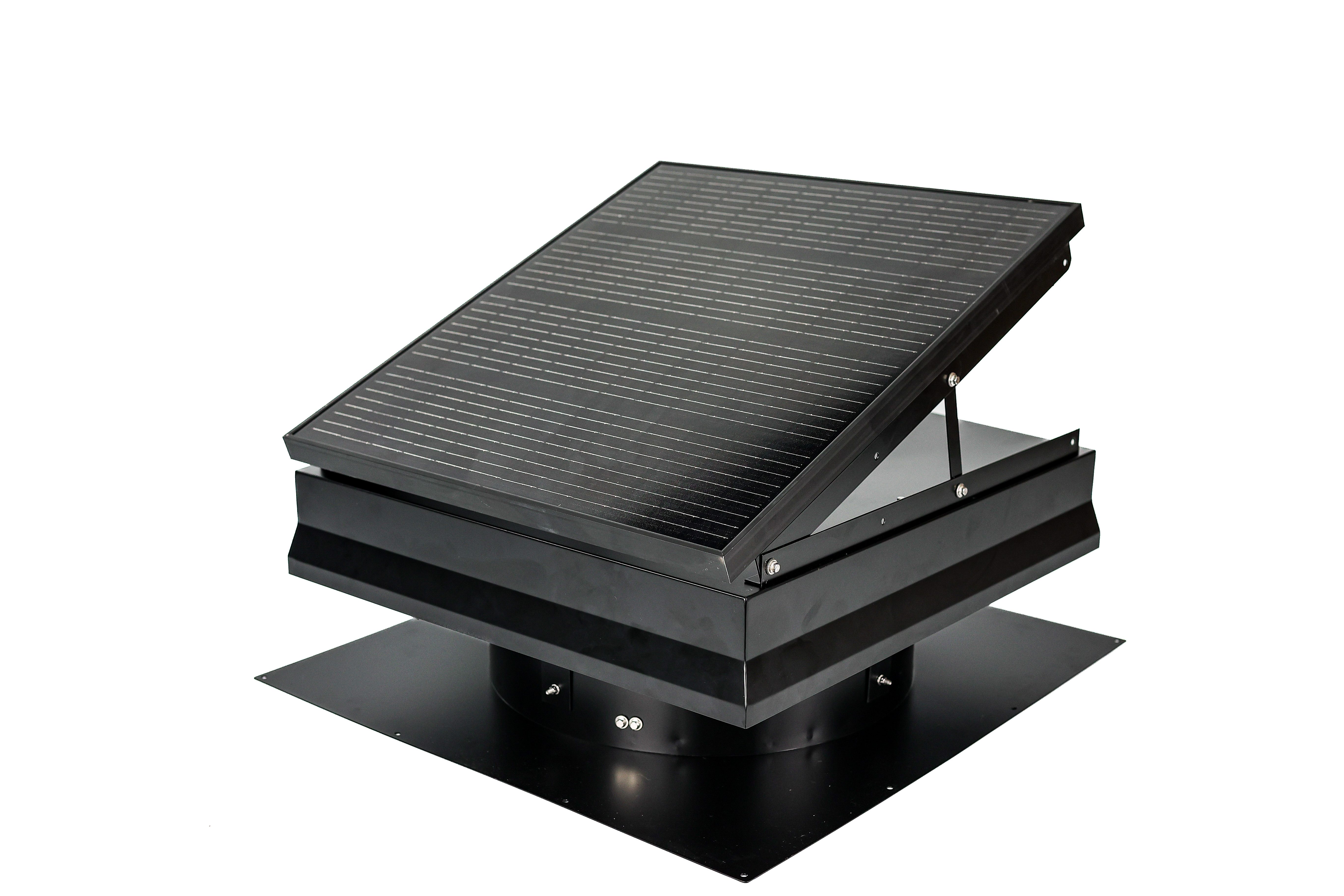
- The 25W roof mount: up to 1,365 CFM, with coverage guidance up to 1,300 square feet. It is a compact roof-mount option with a fixed solar panel.
- The 30W roof mount: up to 1,550 CFM, with coverage guidance up to 1,500 square feet. Review the exact model certifications and control features for the job.
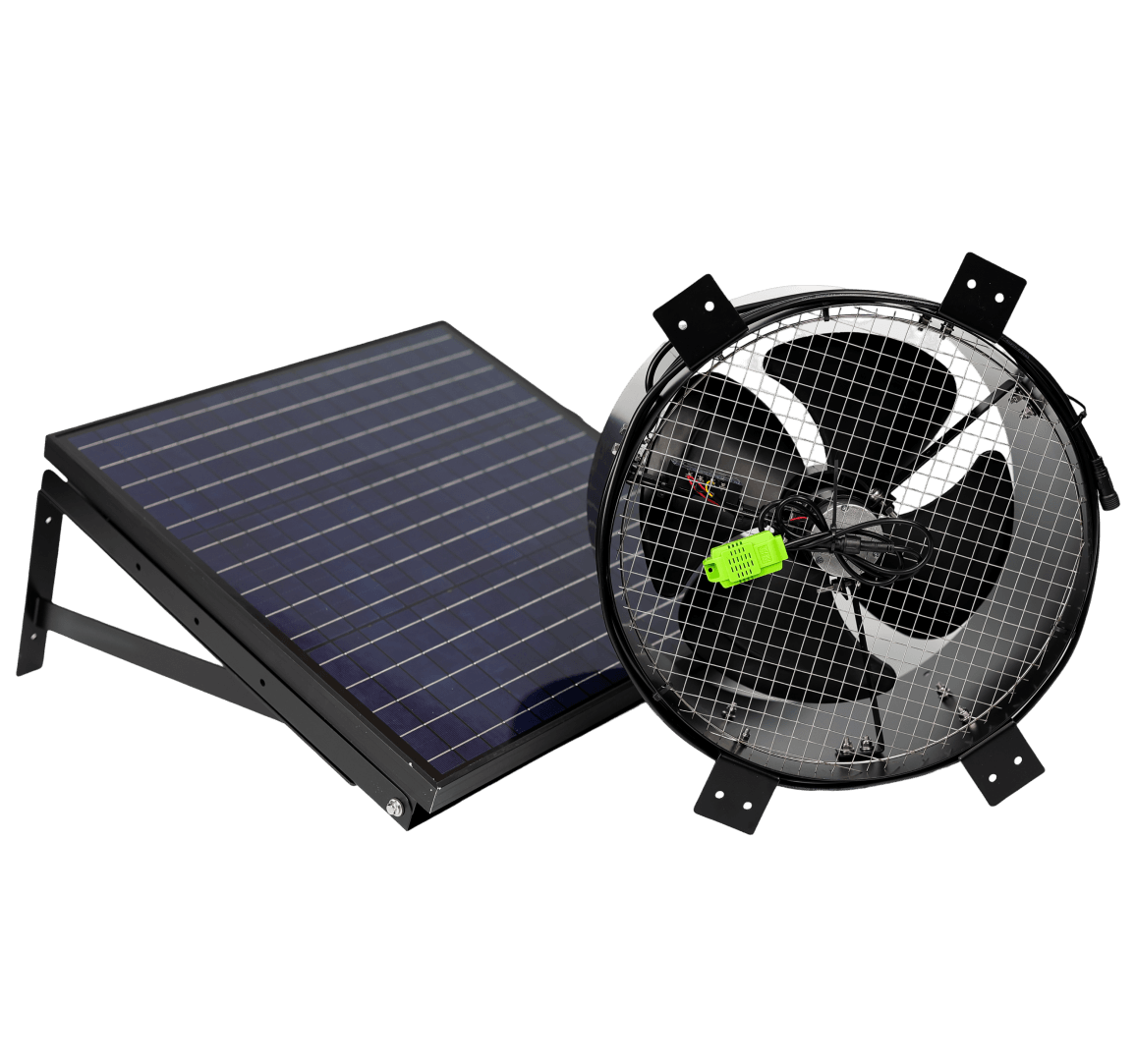
- The 30W gable mount: up to 1,550 CFM, with coverage guidance up to 1,500 square feet. Use it when a gable installation is the appropriate application.
- The 70W roof mount: up to 3,850 CFM, with coverage guidance up to 2,500 square feet. Confirm that the roof and installation conditions support its use.
Always open the specification page for the exact fan you plan to quote. Review the 25W roof-mount page, 30W roof-mount page and 70W roof-mount page for model-level airflow and coverage guidance. That documentation is more useful than a generic claim that one fan covers every attic of a certain size.
One Fan vs. Multiple Fans: Solar-Specific Placement Decisions
One solar attic fan may be appropriate when its documented airflow rating meets the target and the attic has a clear, balanced airflow path. Multiple fans may be preferable when the target exceeds one unit, the roof has separated zones or one location cannot serve the entire attic without creating an uneven layout.
Use one fan when the application supports it
- The calculated project target is at or below the selected model's documented output.
- The fan can be placed where solar exposure and roof construction support the installation.
- The attic is sufficiently open that one exhaust location can serve the intended area.
- Intake ventilation is available and not blocked by insulation, framing or missing airflow paths.
Consider multiple fans when the layout calls for distribution
- The target CFM is greater than one selected unit can provide.
- Separate roof planes or attic compartments create distinct ventilation zones.
- Roof geometry, framing or obstructions would leave part of the attic poorly served by one location.
- Two smaller, well-placed units are more practical than one larger unit for the specific roof and access conditions.
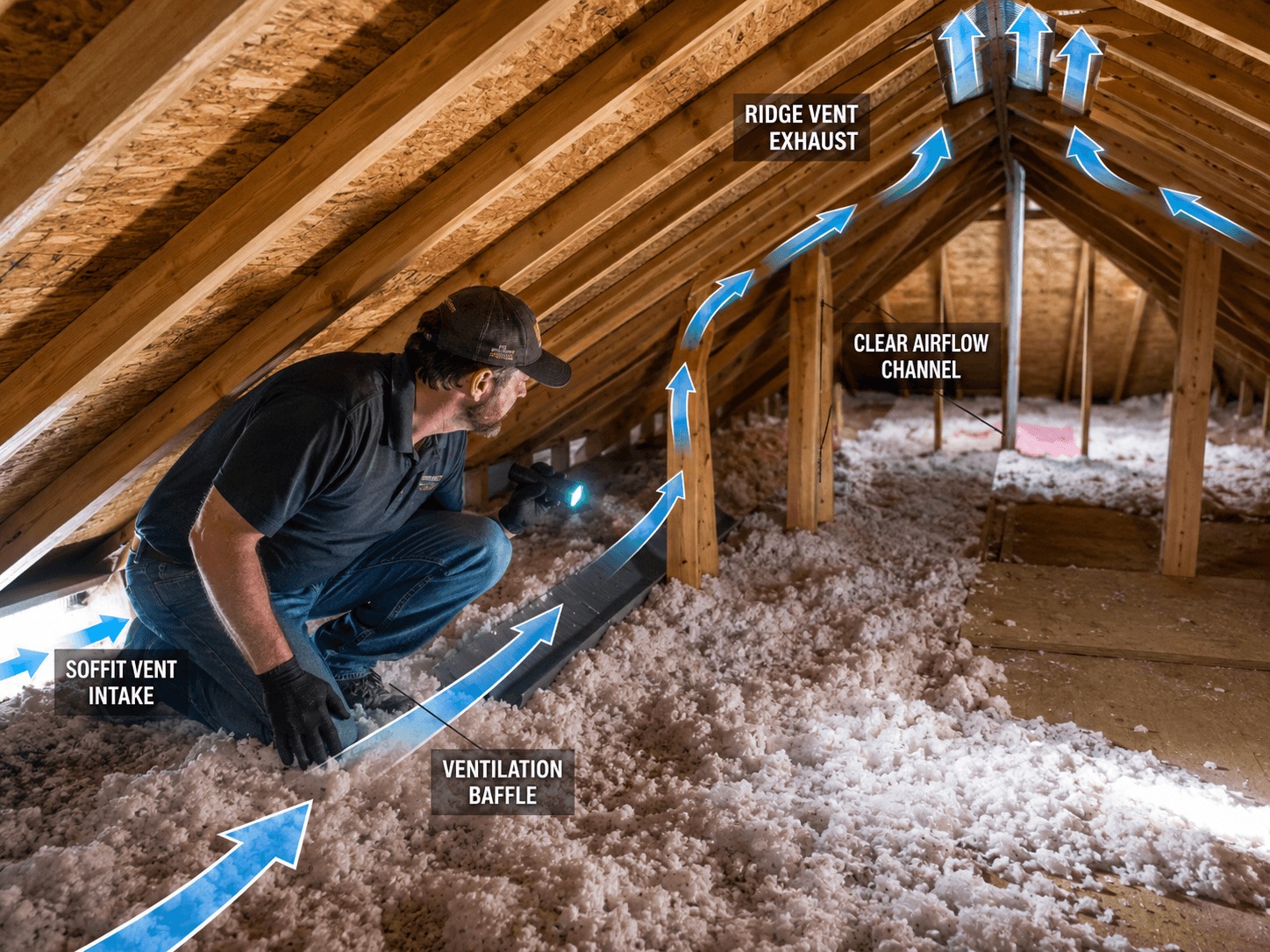
Adding exhaust capacity without confirming intake capacity is not a complete solution. Inspect the whole airflow path before finalizing the fan count. For related contractor education on airflow-path evaluation, see The Attic Depot's attic inspection guide.
Talk with The Attic Depot about your contractor product plan when you need model documentation, product guidance or dealer resources for upcoming jobs.
Worked Fan-Count Examples Using Rated Product CFM
These examples show the count calculation only. Each target CFM below is hypothetical and assumed to have already been established by the contractor's assessment. The examples do not establish code minimums or replace a ventilation design review.
- 1,200 CFM target with the 25W roof mount: 1,200 / 1,365 = 0.88, so the minimum whole-unit count is one.
- 2,500 CFM target with the 30W roof mount: 2,500 / 1,550 = 1.61, so the minimum whole-unit count is two.
- 3,200 CFM target with the 70W roof mount: 3,200 / 3,850 = 0.83, so the minimum whole-unit count is one.
- 4,200 CFM target with the 70W roof mount: 4,200 / 3,850 = 1.09, so the minimum whole-unit count is two.
The math produces a starting count, not an automatic recommendation. For the 2,500 CFM example, two 30W fans provide a combined published rating of up to 3,100 CFM. The contractor still needs to confirm placement, intake, roof conditions, controls, certifications and the exact product documentation before quoting the job.
When comparing options, do not select a larger model solely because its number is higher. Confirm whether the roof can accept that mount, whether the unit's solar exposure is suitable, whether the customer needs roof or gable installation and whether the model's documented coverage aligns with the application.
Pre-Installation Checks Before Finalizing Fan Count
Before recommending one or more solar attic fans, verify the conditions that make the CFM calculation meaningful. A correct division problem cannot compensate for blocked intake, an unsuitable mounting location or a product that does not match the roof and climate requirements.
- Confirm the target: Record the target exhaust CFM and its source in the job notes. Keep code and design calculations separate from the product-count math.
- Inspect intake airflow: Check soffit vents, baffles, gable intake and other planned intake paths for continuity and obstructions.
- Map the attic: Identify separated zones, low-clearance areas, framing constraints and roof planes that affect placement.
- Match the model: Verify the exact fan's airflow, coverage guidance, mount, controls, solar-panel configuration and installation instructions.
- Check regional requirements: Confirm whether the job requires a specific certification or windstorm-approved product. Do not assume one model's certification applies to every model.
- Document the recommendation: Show the target CFM, model rating, round-up calculation, proposed locations and any assumptions that need customer or code official confirmation.
This checklist protects the contractor from treating a simple fan-count formula as a complete attic design. It also creates a clear explanation for the homeowner: the recommended number is tied to the home's airflow assessment and the documented output of the selected equipment.
Frequently Asked Questions About Solar Attic Fan Count
How many solar attic fans does a 1,500-square-foot attic need?
There is no reliable answer from square footage alone. Start with the attic's established target exhaust CFM, then divide by the documented rating of the selected fan and round up. The model's published coverage guidance can support the conversation, but it does not replace the project assessment.
Can I use the fan's wattage to determine how many units I need?
No. Wattage describes the solar-panel or power specification, not the complete airflow requirement. Use the exact model's published CFM rating for the count calculation, then confirm its installation conditions, controls and coverage guidance.
Is one high-output solar attic fan better than two smaller fans?
Not always. One high-output fan may simplify a suitable open layout, while two smaller fans may distribute exhaust more effectively across separate roof zones. Compare the exact model requirements, target CFM, intake path, roof construction and placement before choosing.
Should contractors install more fans if the attic feels hot?
Not automatically. Heat can involve intake restrictions, insulation, air leakage, roof exposure, moisture or other building conditions. Inspect the airflow path and establish the target before increasing exhaust capacity. More fans do not correct a blocked intake path.
Does a solar attic fan need electrical wiring?
Product requirements vary by model. The Attic Depot's 25W roof-mount model is documented as requiring no electrical wiring, but contractors should verify the installation instructions for the exact fan being proposed rather than generalizing one model's requirements.
Where can contractors compare The Attic Depot solar attic fan models?
Contractors can review The Attic Depot solar attic fan hub and open the specification page for the exact roof-mount or gable-mount model. Authorized dealers can also contact The Attic Depot for product, shipping, technical and dealer-support questions.
Become a dealer with The Attic Depot to access contractor-focused solar attic fan products, support and resources. The dealer program is free to join, with no contracts and no order minimums.
For contractors, the best answer to "how many solar attic fans does a house need?" is a documented, explainable count: establish the target, divide by the exact model's rated CFM, round up and then validate the placement and airflow path. That process gives the customer a recommendation grounded in the job rather than a one-size-fits-all square-foot rule.