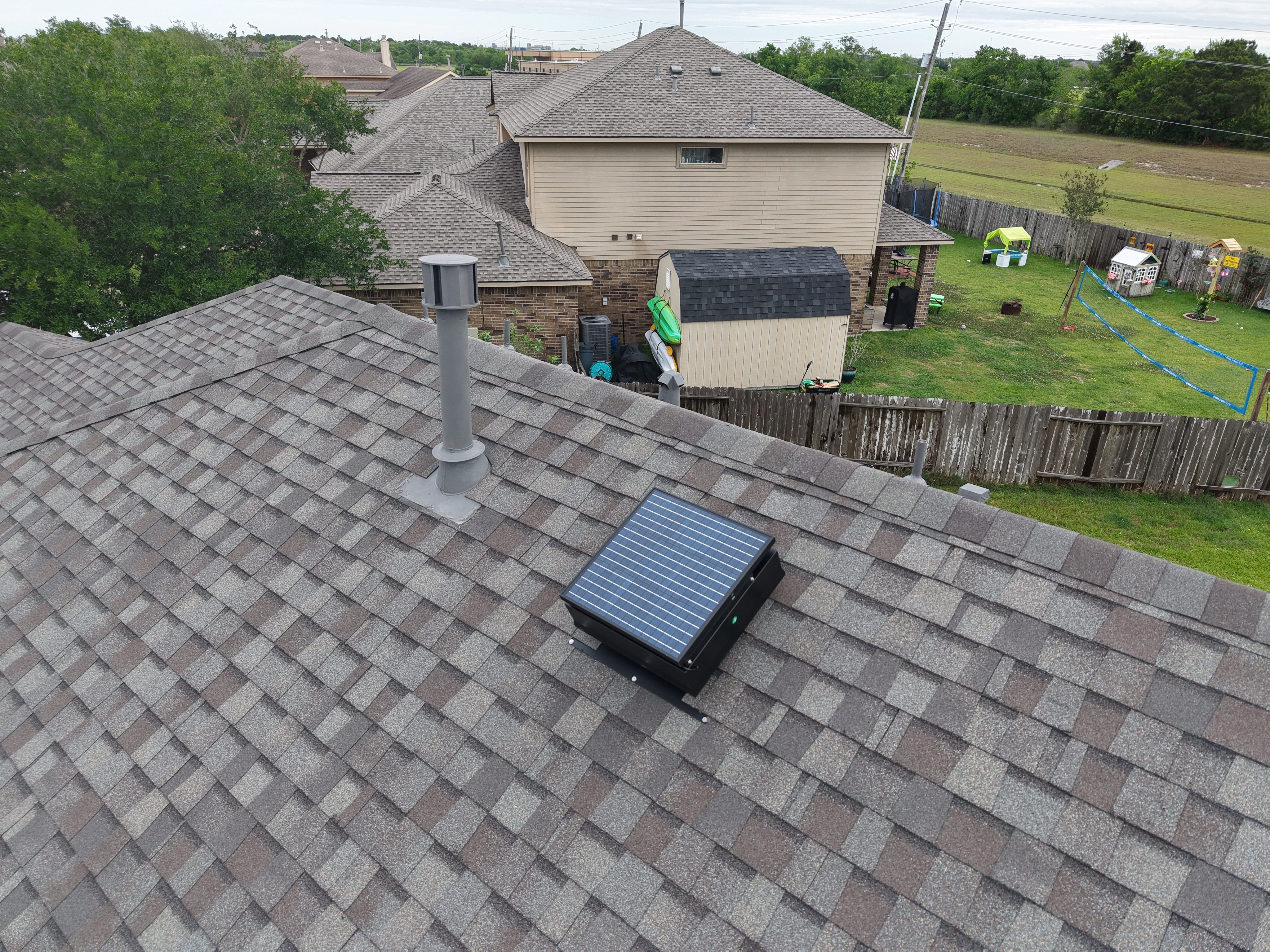

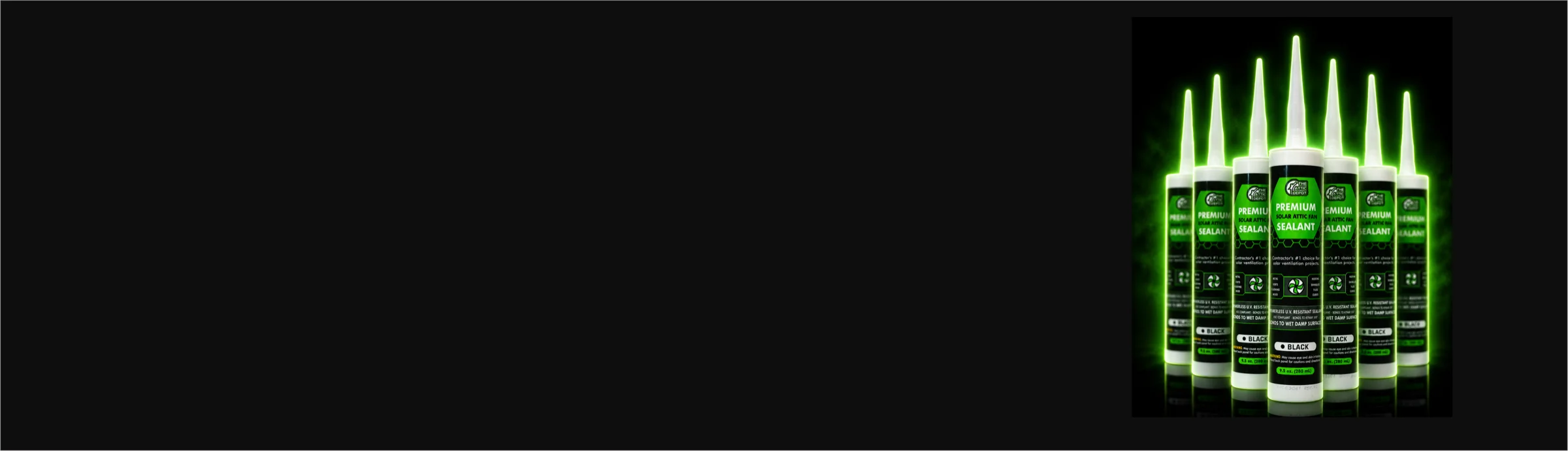
Roof penetrations are small details with outsized consequences. A clean, well-supported seal around a solar attic fan helps protect the finished installation and gives the customer confidence in the work. Premium Solar Sealant is a contractor-grade accessory developed specifically for The Attic Depot solar attic fan installations. Listed uses include curb and flashing seams, roof-to-metal transitions, fastener heads, and penetrations around conduits and brackets.
For a premium solar sealant contractor application, treat the sealant as part of the complete roof-penetration workflow: assess the substrate and surrounding flashing. Follow the current product directions, and confirm job-specific questions with The Attic Depot technical team before application.
The right approach starts with understanding why penetration sealing matters, then matching the product and workmanship plan to the roof assembly in front of you. The sections below focus on practical decisions contractors can make without substituting general guidance for current label instructions.
Why Roof Penetration Sealing Matters After Solar Attic Fan Installation
Installing a solar attic fan creates a new roof penetration, so the finished assembly needs more than a properly positioned fan. Flashing and sealing must work with the roof's existing water-control layers to help direct rainwater away from the opening. The Building America Solution Center from PNNL identifies vents, exhaust fan penetrations, and mounting brackets as potential weak spots in a roof's water-control layer. It recommends integrating flashing and sealing with that layer rather than treating the penetration as an isolated detail: PNNL guidance on flashing roof penetrations.
That is the workmanship context for using Premium Solar Sealant around a solar attic fan. The Attic Depot describes the product as intended for roof penetrations around its solar attic fan installations. This includes curb and flashing seams. Its black finish can support a clean professional appearance from ground level. It is a product-specific sealing accessory, not a substitute for evaluating the flashing, roof covering, or drainage path around the installation. Review the Premium Solar Sealant product details and follow current product directions for the specific roof assembly.
Sealing is not the same as attic ventilation
A sealant helps address a roof penetration and potential water path. Ventilation addresses air movement and moisture management within the attic. They support different parts of the job and should not be presented as interchangeable. The U.S. Department of Energy notes that moisture can enter an attic through roof leaks or improperly installed flashing. While also identifying proper ventilation as a separate factor in attic durability: DOE guidance on durable attics.
For contractors, the practical takeaway is to inspect the penetration as a roof-water-control detail. Keep the ventilation purpose of the fan clear, and avoid promising that sealant alone resolves every attic moisture condition. When surface preparation, placement, cure, or job-specific compatibility is uncertain, use the current product instructions or contact The Attic Depot technical support before completing the work.
What Makes Premium Solar Sealant a Contractor-Focused Choice?
Product selection matters when a sealant is part of a solar attic fan installation. Premium Solar Sealant is described as a contractor-grade roof sealant developed and approved exclusively for The Attic Depot solar attic fan installations. Review the Premium Solar Sealant product details and confirm current product directions before applying it on a specific job.
| Documented property | What the product page states | Contractor implication |
|---|---|---|
| Purpose and fit | Designed specifically for The Attic Depot solar attic fan installations. | It aligns the accessory with a defined installation context rather than asking the crew to select a general-purpose sealant without product-specific guidance. |
| Appearance and outdoor exposure | Black and UV resistant. | The color can support a clean, discreet finish around relevant roof work, while UV resistance is a documented property for outdoor exposure. It does not replace a workmanship inspection. |
| Movement and weather | Flexible to handle expansion, contraction, and vibration; described as resisting cracking and shrinking and creating a weatherproof bond. | The stated properties are relevant where roof components experience movement. The crew still needs to evaluate the penetration and follow current directions for the actual application. |
| Adhesion | Primer-less adhesion to common roofing materials. | This may simplify product selection for listed roofing materials, but primer requirements and surface condition should be confirmed from the current product instructions. |
| Application conditions | Application temperatures are listed as -35 F to 140 F. Service temperatures once cured are listed as -40 F to 200 F. | These ranges help the contractor screen job conditions. They are not a substitute for checking the current label, substrate condition, or cure guidance. |
| VOC status | Described as VOC compliant. | This gives the contractor a documented product attribute to review against project requirements and applicable local rules. |
These properties describe product characteristics, not a blanket approval for every roof condition. When the job falls outside the documented use case, or the crew needs direction on preparation. Cure, or compatibility, consult the current product instructions or contact The Attic Depot technical support.
How Premium Solar Sealant Contractor Application Protects Roof Penetrations
A reliable sealant workflow begins with the complete roof penetration, not the cartridge alone. Flashing, roof covering, fasteners, brackets, and surrounding materials must work together as a water-control assembly. The Building America Solution Center recommends integrating flashing and sealing with the roof's air and water control layers so water is directed down and away from the building. Review the PNNL guidance on flashing roof penetrations for that broader principle.
- Confirm the scope before applying product. Identify the solar attic fan curb or flashing seams, roof-to-metal transitions, fastener heads, conduits, brackets, and mounting feet that require attention. Premium Solar Sealant is listed for these application areas. It is a finishing and sealing component within the installation, not a substitute for properly planned flashing or sound roof construction.
- Inspect the work area and surrounding control layers. Check that the penetration, flashing, roof covering, and adjacent materials are installed and positioned as intended. Look for gaps, movement, damaged materials, or drainage paths that could undermine the assembly. Do not assume that a bead of sealant can correct a missing or improperly integrated flashing detail.
- Verify the current product directions and job conditions. The product page states that Premium Solar Sealant sticks to wet and damp surfaces, but that claim does not remove the need for a professional surface assessment. Confirm the current label or technical guidance for preparation, application conditions, cure expectations, and any substrate-specific requirements before starting. The available product information does not establish detailed preparation, bead-size, coverage, or cure instructions.
- Apply only to verified, intended locations. Keep the application focused on the documented roof penetration details and compatible project materials. Use the product's black finish where an orderly, professional appearance matters, while avoiding excess material that can obscure flashing, drainage, fasteners, or inspection points.
- Perform a final workmanship check. Inspect the finished transitions from close range and from the normal viewing angle. Confirm that the seal is continuous where specified, that drainage is not blocked, and that no exposed gap, loose edge, or disturbed component has been overlooked. Record the product and installation notes required by your company's quality process, then direct job-specific questions to The Attic Depot technical support team.
For the broader installation sequence, use the customer's solar attic fan installation steps resource alongside current product instructions. That combination helps keep sealant application in its proper role: supporting a carefully integrated roof penetration rather than masking an unresolved installation defect.
Which Roof Surfaces Work With Premium Solar Sealant?
Premium Solar Sealant is listed for several roof and flashing surfaces commonly encountered during solar attic fan work. The documented compatibility list includes Kynar 500 metal finishes, metal vents, Kynar-coated flashings, wood, roofing shingles, roof tiles, curbs, and general roof penetrations. These applications align with the product's intended role around fan curbs, flashing, and related roof details. Review the Premium Solar Sealant product details before specifying it for a project.
That list is useful for job planning, but it is not blanket approval for every roof assembly, coating, membrane, or substrate a contractor may encounter. A listed surface does not remove the need to inspect the existing material. Identify the actual finish or assembly, and confirm that the planned use matches the current product directions. If a roof includes an unusual coating, composite detail, aged material, or a transition between different substrates. Pause and verify the application with The Attic Depot's technical support rather than extending the compatibility list by assumption.
The product page also states that the sealant sticks to wet and damp surfaces, with a listed application temperature range of -35 F to 140 F. Those claims describe documented product properties. They do not replace sound jobsite judgment or mean a contractor should ignore unsafe conditions, standing water, contamination, damaged roofing, or the current label's requirements. Confirm the applicable temperature and surface conditions for the specific roof assembly before application.
For a professional *premium solar sealant contractor application*, keep the decision product-specific. Match the substrate to the listed categories, follow current directions, and request technical guidance when the assembly falls outside a clear match.
How Can Contractors Present Sealant as a Value-Add?
Position sealing as part of a complete installation scope, not as an unexplained extra line item. When reviewing the job with a customer, explain that the work includes attention to roof penetrations. Curb or flashing seams, fastener heads, and other applicable transitions associated with the solar attic fan installation. Premium Solar Sealant is specifically intended for these uses, according to its product documentation.
This approach keeps the conversation focused on workmanship and scope clarity. It also gives your team a practical way to explain why the finishing details matter. The product is black and is intended to help create a clean, professional appearance from ground level. Keep the description accurate. Do not promise a particular savings amount, leak-prevention guarantee, service life, or customer outcome that is not stated in the current product information.
Make the scope visible before the work begins
Include sealing in the written installation scope when it applies. Name the locations your crew will evaluate and address. Avoid a vague phrase such as "weatherproofing included." That gives the customer a clearer understanding of the work and creates an internal quality checkpoint for the installer. It also helps separate the installation conversation from unrelated roof repairs that may require a separate assessment.
For a broader view of the equipment your team may be installing, review the solar attic fans for contractors. Pair the equipment discussion with the applicable sealing details, and direct job-specific questions to the current product instructions or The Attic Depot technical support. Authorized dealers can also use Attic Depot World resources, including sales tools, brochures, training materials, videos, and promotional resources, to support a consistent customer conversation.
Where Can Contractors Get Premium Solar Sealant and Support?
Premium Solar Sealant is available through The Attic Depot, which developed the product for its solar attic fan installations. For contractors, that supply relationship is also a support relationship. You can review the Premium Solar Sealant product details, then contact the team when a project calls for product-specific guidance.
Because application conditions and roof assemblies vary, use the current product directions and ask technical support about job-specific questions. The available product information does not establish every surface-preparation step, cure time, coverage expectation, or sealant warranty. Confirm those details before building them into your installation process or customer explanation.
More than product access
Authorized-dealer enrollment connects contractors with practical business resources as well as products. Through Attic Depot World, dealers can access marketing resources, social media videos, sales tools, brochures, training resources, and promotional materials. The Attic Depot also supports contractors with product training and technical assistance, helping your team communicate accurately and execute work with greater consistency.
The partnership is designed for contractors who want a wholesale supplier that helps them grow without competing for their customers. The Attic Depot does not sell directly to homeowners, so it does not undercut the dealer network by inviting homeowners to purchase products directly. Dealer enrollment is free, with no contracts and no order minimums, according to the customer information provided by The Attic Depot.
Become an authorized dealer to access Premium Solar Sealant, contractor support, and dealer resources, or call 832-379-5757 to discuss your needs.
Frequently Asked Questions
What is Premium Solar Sealant intended for?
Premium Solar Sealant is a contractor-grade accessory developed for The Attic Depot solar attic fan installations. It is intended for roof penetrations, including solar attic fan curb and flashing seams, roof-to-metal transitions, fastener heads, and penetrations around conduits, brackets, and mounting feet. See the Premium Solar Sealant product details for the documented use cases.
Which roof surfaces can contractors use it on?
The product page lists metal vents, Kynar-coated flashings, wood, roofing shingles, roof tiles, curbs, and general roof penetrations among compatible surfaces. Confirm the substrate and the current product directions before application. The available product information does not define every preparation step or jobsite condition, so contact technical support when a project presents an unusual surface or transition.
Can Premium Solar Sealant be applied to damp surfaces?
The product page says the sealant sticks to wet and damp surfaces. That claim does not replace sound workmanship or a site assessment. Confirm the current label directions, evaluate the condition of the roof and penetration, and follow applicable safety practices before deciding how to proceed on a damp jobsite.
How can contractors get product and application support?
Premium Solar Sealant is available through The Attic Depot's authorized dealer network. Authorized dealers can access Attic Depot World resources, including training materials, sales tools, brochures, videos, and promotional resources. Contractors can call The Attic Depot at 832-379-5757 for product and job-specific technical questions, or become an authorized dealer.
Ready to Become an Authorized Dealer?
Dealer support can help contractors access the right product guidance, training, and resources for solar attic fan work. To get started, **become an authorized The Attic Depot dealer** or call 832-379-5757 to talk with the team.