
Dark streaks on asphalt shingles are more than a homeowner complaint. For roofing and related contractors, they can signal a practical service opportunity that fits inspections, maintenance conversations, and restoration follow-up. A clear process helps you address the visible problem while giving customers useful guidance about the roof's condition.
Become a Dealer to add contractor-focused roof-care products, training, and support to your service offering.
Roof algae removal is the professional cleaning and follow-up process used to address algae-related discoloration on a roof surface. The right approach starts with identifying the growth and roof conditions, protecting the property, following current product-specific directions, and checking for visible damage rather than relying on high pressure. That creates a safer, more useful service conversation for both contractor and customer.
Understanding what the service includes makes it easier to explain its value, set expectations, and decide where it belongs in your existing roofing or related contractor business. Start with the problem customers can see and the conditions that shape it.
What Is Roof Algae Removal?
Roof algae removal is the professional cleaning and maintenance work used to address algae-related discoloration and other visible biological growth on a roof surface. In practice, the service is not simply about making shingles look newer. A contractor evaluates what is present, how broadly it has spread, and what the roof and surrounding property require before selecting an appropriate cleaning approach.
Algae often appears as dark streaks or wedge-shaped areas. It may be more noticeable on shaded roof sections or on north- and west-facing slopes, where moisture can remain longer. The Asphalt Roofing Manufacturers Association provides general guidance on algae and moss prevention and cleaning for asphalt roofing systems. But product directions and roof-specific recommendations should always come from the applicable current product information.
The service can involve more than algae alone. Moss is raised and plant-like, while algae commonly presents as flatter dark staining. Those conditions can overlap, and moss or algae can make a roof surface slippery. Oregon State University Extension cautions that high-pressure devices can damage the granular surface of composite shingles. So aggressive pressure washing is not a substitute for a thoughtful service process.
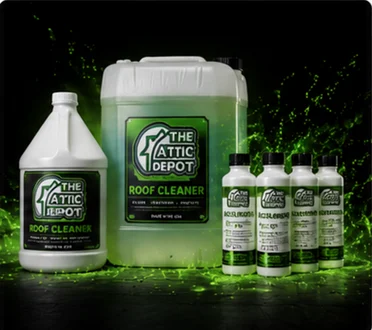
For a roofing or exterior-service contractor, roof algae removal is an opportunity to solve a visible customer problem with a defined maintenance service. It can fit naturally alongside roof inspections, repairs, and other property-care conversations. Contractors can review the Roof Cleaner product information for the product-specific context, while keeping the scope and recommendations tied to the roof's condition rather than promising an unsupported result.
Why Roof Algae Removal Matters for Contractors and Customers
Dark streaks and wedge-shaped discoloration can make a roof look neglected. Staining does not by itself prove that the roof has lost strength or service life. Growth is often more noticeable on shaded or north- and west-facing areas, where surfaces dry more slowly. That gives contractors a useful reason to discuss roof maintenance during inspections and other service calls. Roof Cleaner product information can help contractors review an appropriate professional product option without turning general guidance into product-specific directions.
For customers, the value begins with a clearer understanding of what they are seeing. Algae, moss, and other surface growth are not automatically evidence that a replacement is needed. A knowledgeable contractor can assess the roof, distinguish cosmetic staining from visible damage, and explain what cleaning or continued monitoring may make sense for that roof and its environment. That practical conversation builds trust and can help a customer address maintenance before the concern becomes part of a larger roofing discussion.
For contractors, roof algae removal can be a legitimate service opportunity that fits naturally with inspections, repairs, maintenance plans, and replacement consultations. It creates another useful conversation with existing customers and gives crews a way to solve a visible problem without promising a specific lifespan, savings amount, or permanent result. Prevention should be framed as ongoing maintenance rather than a guarantee. Conditions such as shade, moisture, rainfall, roof materials, and surrounding trees can influence whether growth returns.
Safety and method matter as well. Moss or algae can make roof surfaces slippery, and high-pressure equipment can damage composite shingles by removing granules, according to Oregon State University Extension guidance. Contractors should follow current product instructions, protect surrounding areas, inspect for visible damage, and set realistic follow-up expectations. Done well, the service combines customer value with an additional, supportable offering for the roofing business.
How Should Contractors Approach a Roof Algae Removal Job?
A repeatable roof algae removal process helps contractors protect the customer's property, assess the roof accurately, and build a clear plan for the work that follows. Industry guidance from the Asphalt Roofing Manufacturers Association provides useful general context for cleaning algae and moss from asphalt roofing systems. Product-specific directions should always come from the current label and official product information.
- Assess the roof and surrounding conditions
Start from the ground, then inspect the roof as conditions allow. Note dark streaks, areas of algae or moss, shade, nearby trees, drainage paths, roof access, and visible damage. Growth may be heavier where surfaces stay shaded or dry more slowly. Separate cosmetic staining from concerns that may require broader roof repair or replacement. If the surface is wet or slippery, adjust the work plan before anyone proceeds.
- Protect the property and work area
Plan for landscaping, exterior walls, windows, vehicles, walkways, gutters, and anything below the roof edge. Establish how runoff and debris will be managed, and communicate the work area with the customer before starting. Use the equipment and access practices appropriate for the roof, weather, and job conditions.
- Follow the current product label and roof-specific directions
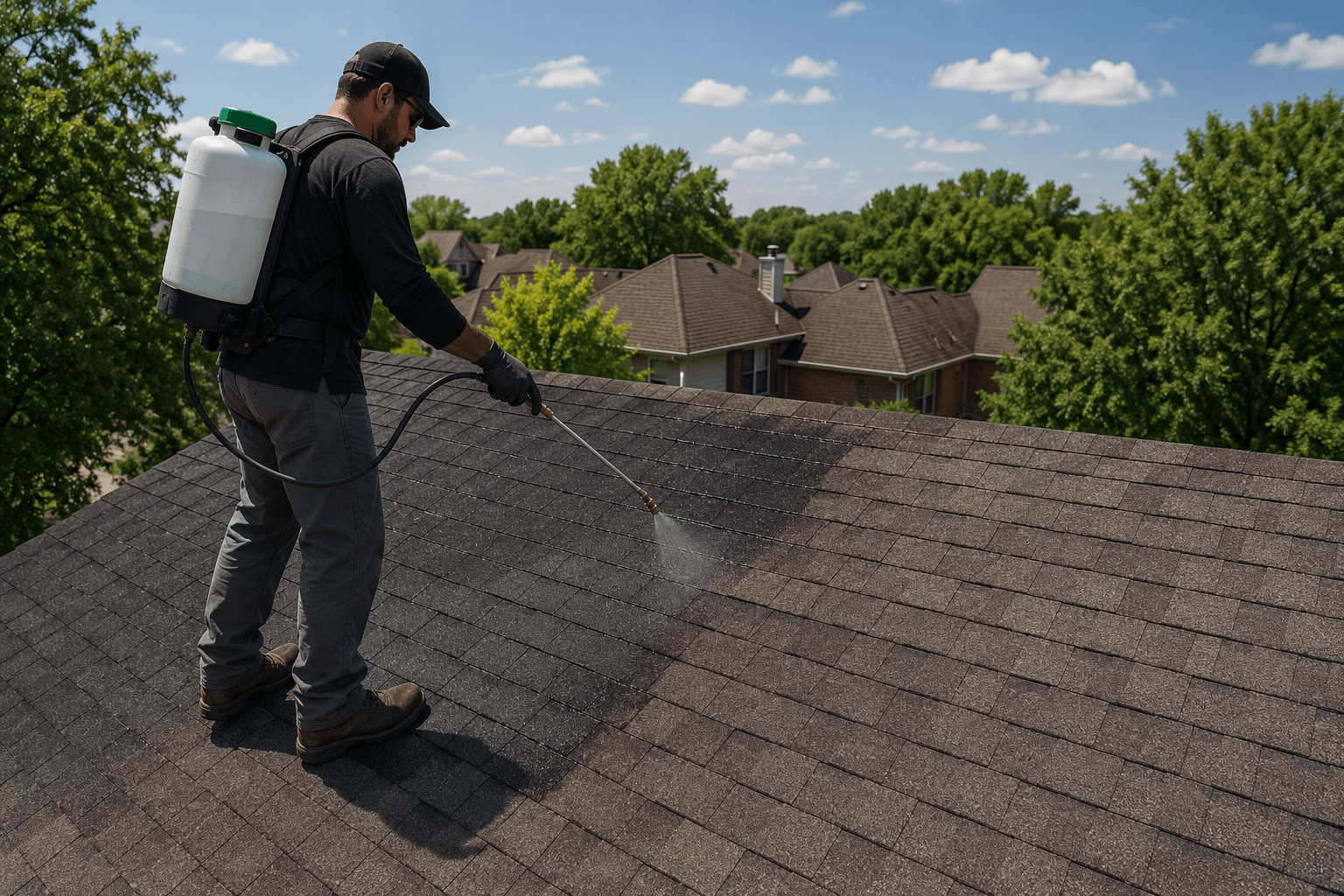
Use only a product suited to the roof and the stated cleaning purpose. Read the current label and official product directions before application, including any requirements for preparation, use, rinsing, or surrounding surfaces. Do not improvise chemical ratios, coverage rates, or application steps. Avoid high-pressure methods that can damage asphalt shingles and remove granules.
- Inspect the result and the roof surface
After the work, review the treated areas and look for conditions that need additional attention. Check visible roof features, drainage points, and the surrounding property. Roof cleaning addresses the cleaning scope; it does not replace a roof-condition inspection or repair assessment.
- Document the job and plan follow-up
Keep before-and-after photos, notes about the roof and treatment, the product used, and any areas that were excluded. Give the customer a concise record of what was completed and what to watch. Schedule a follow-up when appropriate, especially where shade, moisture, or recurring growth may affect future maintenance needs.
Roof Cleaner or Roof Rejuvenation? Match the Service to the Roof
Roof algae removal and roof rejuvenation can both create useful service opportunities, but they answer different customer needs. Roof Cleaner belongs in the conversation when the roof has visible discoloration or surface growth. Shingle Serum belongs in a conversation about aging shingles and a roof that may be a candidate for a rejuvenation service. Keeping those roles clear helps you recommend the right next step without overpromising what either product will do.
| Offering | Job | Customer conversation | Next step |
|---|---|---|---|
| Roof Cleaner | Address a roof-cleaning need, such as visible algae-related staining or discoloration. | Talk about the roof's appearance, the customer's maintenance concern, and whether cleaning fits the condition you observe. | Review the official product information, assess the job, and build roof cleaning into the service conversation where appropriate. |
| Shingle Serum | Support a separate roof rejuvenation conversation for aging shingles. | Discuss the roof's age and overall condition, then determine whether rejuvenation is the service the customer is asking about. | Use the official product information to guide the product-specific discussion and define the appropriate service scope. |
This distinction also makes your estimate easier to explain. A customer asking about dark streaks is not automatically asking for rejuvenation, and a discussion about aging shingles is not simply a roof-cleaning request. Treat each as its own service opportunity, and keep product claims and directions tied to the applicable official information.
For contractors, that clarity can turn an isolated question into a better customer conversation. The Attic Depot supports authorized professionals with product education, training, sales and marketing resources, and technical support. That contractor-first model gives you room to add relevant roof maintenance services while working with a supplier that does not sell directly to homeowners or compete with its dealers.
How to Add Roof Algae Removal to Your Existing Service Offer
Roof algae removal can give roofing and related contractors another useful service to discuss with existing customers. It fits naturally into conversations about roof appearance, maintenance, and long-term property care. It also gives your team a practical way to create more value from relationships you already built.
Start by looking for the customer situations your team already encounters. A roofing contractor may notice dark streaks during an inspection or maintenance visit. An attic, ventilation, or insulation contractor may see exterior roof concerns while evaluating the broader home performance picture. In each case, the conversation can focus on the customer's need first: identify the visible condition, explain what the service addresses, and outline the next step without promising a result the product information does not support.
Package the service around the work you already do. Roof algae cleaning can be offered as a standalone maintenance option, included in a broader roof-care conversation, or presented alongside related services when the property needs more than one improvement. Contractors expanding beyond their original specialty can use the same approach that makes it valuable to add another roofing service: build from a real customer need and make the benefit easy to understand.
Keep the offer straightforward. Explain that roof cleaning and roof rejuvenation are different services, then direct product-specific questions to current official information. The Attic Depot's contractor-focused roofing products can help dealers evaluate complementary options without turning the customer conversation into a product catalog.
This service-expansion model helps contractors differentiate their offer while staying focused on useful, well-supported work. Training, product education, sales resources, and technical support can also make it easier to build roof algae removal into a consistent customer experience.
What Should Contractors Tell Customers After Roof Cleaning?
Close the job with a clear record, not a promise that every dark mark will disappear forever. Show the customer what was observed, what work was completed, and what should be watched over time. Dark streaks can be more noticeable on shaded or north- and west-facing roof areas, where surfaces dry more slowly. Roof discoloration does not necessarily mean the roof has lost strength or service life, so keep the conversation focused on visible conditions and appropriate maintenance.
Document the roof condition
Use before-and-after photos when practical, and note the roof sections that showed algae, moss, heavy shade, damaged materials, or access concerns. A short service record helps the homeowner understand the work and gives your team useful context if the customer calls later. If you find a condition outside the cleaning scope, describe it plainly and recommend an inspection or repair conversation rather than tying it to an unsupported cleaning result.
Set a realistic follow-up plan
Explain that appearance and future maintenance depend on the roof material and surrounding environment. Avoid guaranteeing a specific duration, color outcome, or permanent prevention. Let the customer know what signs should prompt a follow-up, such as returning streaks, new moss, or changes that were not present during the visit. Moss and algae can make roof surfaces slippery, and high-pressure devices can damage composite shingles by removing protective granules, according to Oregon State University Extension guidance.
For product-specific questions, direct your team to current official product information and technical support rather than improvising directions. If a homeowner asks where to purchase products or arrange related work, route them to an authorized professional through the find an authorized contractor page. The Attic Depot supports contractors through its dealer network and does not sell directly to homeowners.
How The Attic Depot Supports Contractors Offering Roof Algae Removal
Adding roof algae removal to your service mix is easier when your supplier understands the contractor business. The Attic Depot works through an authorized dealer network, giving professional contractors access to wholesale products and practical support instead of competing with them for homeowners. That non-compete model lets you keep the customer relationship while building another useful service for existing accounts.
Support starts with product education. Contractors can learn how the available products fit different customer needs, including the distinction between cleaning a roof surface and offering roof rejuvenation for aging shingles. Product-specific information helps your team explain the service clearly and avoid presenting a cleaning product as a rejuvenation treatment or promising results that are not supported by current guidance.
The partnership also extends beyond the product itself. The Attic Depot provides training, sales resources, marketing support, and technical assistance to help contractors develop the service, discuss it with customers, and handle product questions with confidence. That can be especially useful when roof algae removal becomes part of a broader roofing, attic, or exterior-maintenance conversation. You can also review the wider range of contractor-focused roofing products as your service offering grows.
Become an Attic Depot dealer to explore contractor products, training, sales resources, and ongoing support for adding roof algae removal to your business.
The goal is a practical partner relationship: dependable wholesale access, useful education, and help when your team needs technical direction. That is the difference between simply sourcing a product and working with a supplier that is committed to "More Than a Supplier. Your Partner."
Frequently Asked Questions
How can I remove moss from a roof?
Remove moss with a controlled, label-led process rather than high-pressure washing. Inspect the roof first, protect surrounding areas, and use appropriate physical removal and cleaning methods for the roofing material. Oregon State University Extension warns that high-pressure devices can remove the protective gravel layer from composite shingles and recommends taking care on slippery moss- or algae-covered surfaces: roof moss removal guidance. Follow the current directions for any commercial product you use.
What are the benefits of roof cleaning?
Roof cleaning can improve the appearance of stained roofing and give contractors a practical maintenance service to offer alongside inspections, repairs, or restoration follow-up. Dark streaks and wedge-shaped areas can indicate surface growth, especially in shaded or north- and west-facing areas where moisture dries more slowly. Staining alone does not necessarily mean the roof has lost strength or service life, so cleaning should be paired with a condition assessment rather than presented as a replacement for one. See the official Roof Cleaner product information for product-specific guidance.
How can I prevent algae from growing on a roof?
You can reduce recurring algae by identifying moisture and shade conditions, keeping the roof and surrounding areas maintained, and setting a follow-up schedule with the property owner. Prevention is not a one-time promise: commercial treatments may need reapplication, and results depend on the roof material and environment. Use only current official product directions and explain that ongoing inspection can identify new streaking before it becomes a larger customer concern.
What is the best time of year to remove moss from a roof?
The best time is a safe, sufficiently dry period when the roof can be inspected and treated according to the product label. There is no universal month for every market because rainfall, temperature, humidity, roof orientation, and local weather affect growth and drying. Schedule around safe access and stable conditions, then document the work and recommend follow-up when seasonal moisture returns.
Ready to Add Roof Algae Removal?
Adding roof algae removal can give your roofing or related contracting business another practical service to offer customers while expanding the value of work you already do. The Attic Depot can help you understand the dealer program, products, and next steps for building the service into your business.
Get started by visiting the Become a Dealer page and sharing your information with The Attic Depot team.
A . A